

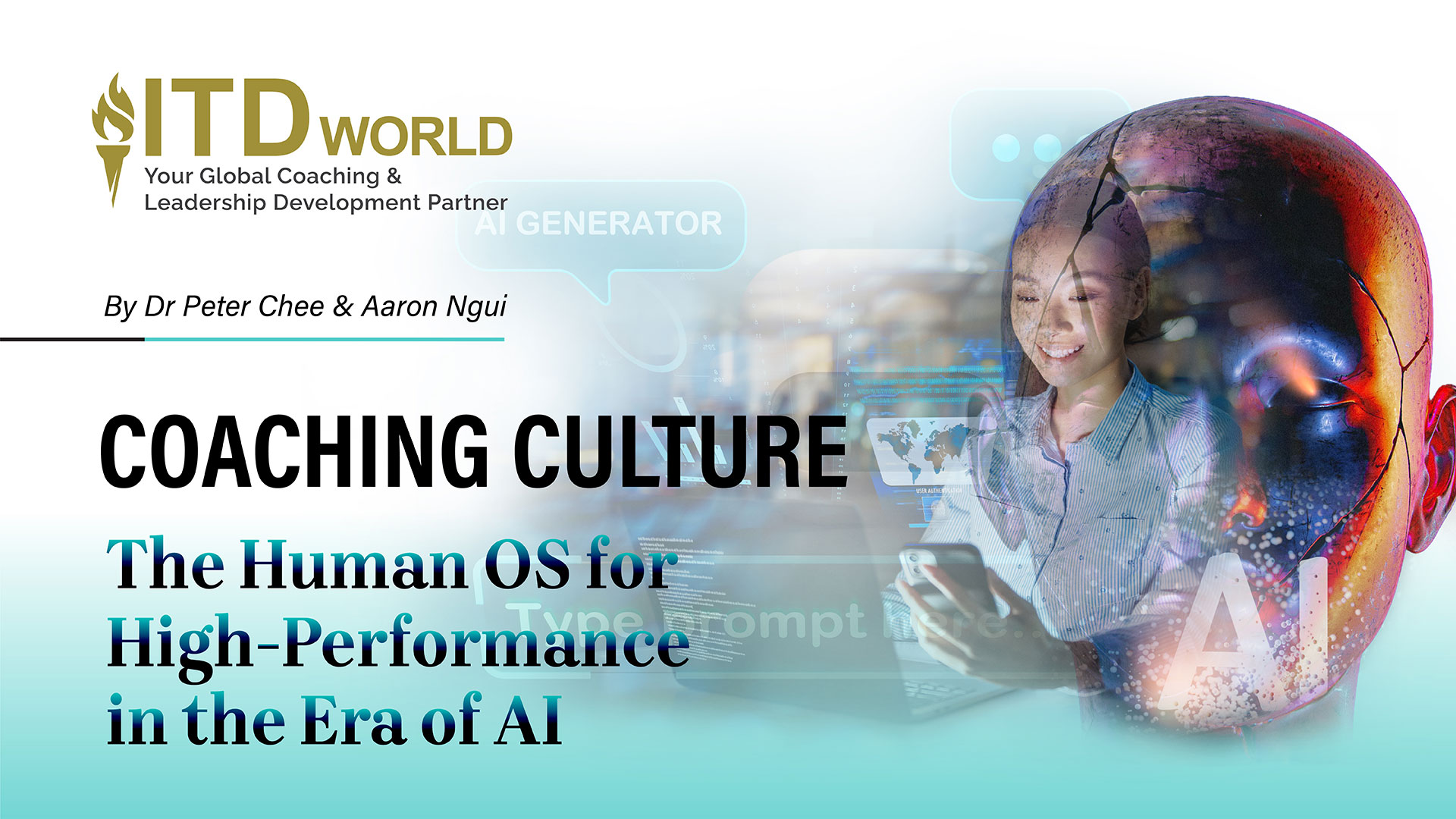
Relying solely on technologyis not the golden ticket for high-performance. Organizations still need people tothink independently, challenge assumptions, collaborate and synergize across boundaries, take ownership, and experiment all while exercising sound judgement in uncertain environments. To effectively doso, leaders would need to address the dual challenge of expending intelligence to their teams; and expanding the human capability to use that intelligence with wisdom.
In this case, creating astrong coaching culture becomes a strategic lever fororganizations. An embedded culture where coaching is away of working drives people to think, learn, challenge, contribute, and be accountable for the desired outcomes.When framed in such away, coaching culture is the Human OS for High-Performance in the era of AI.
From Giving Answers to Developing Better Thinks
Traditional management often operateson theassumption that leaders know theanswers. When people encounterproblems, they escalate themupward with the expectation someone more senior cangive the solution.That approach is increasinglyinadequate when markets,customers and technologyare
changing rapidly.
Coaching changes the conversation. Instead of immediately asking, "Whatshould I tell this person to do?",a coaching leader can ask, "How can I help this person think better?"
Thedifference may seem subtle, butthe organizational implications canbe profound. In onemajor financial institution, coaching became astrategic lever for helping people totake greater responsibility inaddressing businesschallenges. Research associated with theinitiative found that nine in ten coachees met orexceeded their business outcome goals, while eight inten metor exceeded their
professional development goals.
Moreimportantly, better conversations began translatinginto better action. A seniorexecutive described how beingpart of a coaching culture gave them the confidence totake bold action on an operational
problem. Bycollaborating across organizational boundaries, they co-created an automation solution toincrease analysis and minimize humanerror.
Thecoach didnot need to invent the technological solution. Coaching helped create the confidence, ownership andthinking environment from which the innovation emerged.
Answers are becoming easier togenerate inthe eraof AI.Yet, competitive advantage mayincreasingly come from developing people whoknow which questions toask, which problems deserve attention, andwhat to do with the answers they receive.
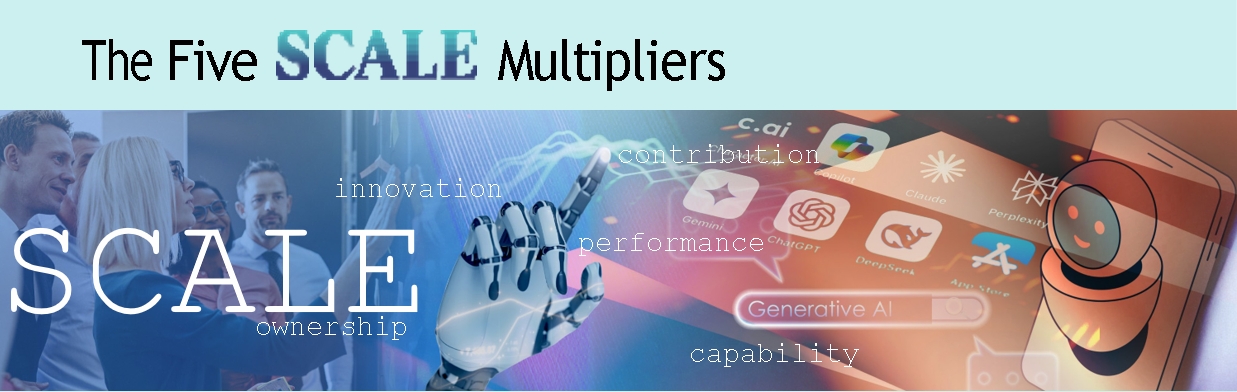
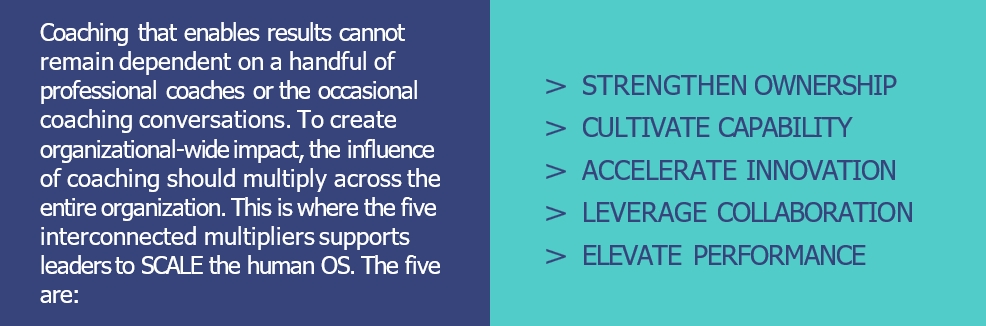
STRENGTHENOWNERSHIP
Command and control leadership can unintentionally teach people to wait for instructions. Coaching does the opposite. Through questioning, listening and constructive challenge, leaders support people to analyse situations, consider alternatives, make decisions, and commit to action. This is especially significant in an AI-enabled workplace. People may have access to extraordinary technology, information and analytical power, but none of those capabilities automatically creates initiative. AI expands what people can do. Ownership determines whether they do something meaningful with it.
CULTIVATECAPABILITY
A few excellent coaches cannot create an organization-wide coaching culture. Coaching capability has to spreada cross all levels and functions.
In one large Asian retail organization, its leadership invested in developing itsown internal coaches, trained leaders incoaching competencies, made coaching resources widely available and
accumulated some 15,000 coaching hours across different levels over three years. The objective was not merely to provide more coaching sessions, butto create internal capability that could sustain coaching as part of everyday leadership.
Aglobal biopharmaceutical organization provides another example. After feedback from more than 80,000 employees highlighted the need for amore future focused approach to development, the company formalized coaching across different stages ofthe employee journey. Subsequently, 89% of surveyed participants reported improved or new skills, 83% reported greater opportunities for personal development, and self reported coaching and feedforward behaviours doubled. The multiplier begins when coaching stops being something people only receive and becomes something increasing numbers of leaders are capable of
giving.
ACCELERATEINNOVATION
AI can generate more ideas in minutes than ateam might previously have generated indays. Yet innovation requires much more than idea generation. People still need the confidence to challenge assumptions, explore unfamiliar possibilities, experiment, learn from failure and convert promising ideas into results.
This is where innovation coaching becomes especially valuable.
Powerful coaching questions can move a conversation from "Why can't this be done?" to "What could make this possible?" They can expose assumptions, widen options and encourage people to test rather than merely debate.
In the earlier case, coaching did not build the automation tool. It helped unlock the confidence and initiative required for someone to question the existing process, reach across organizational boundaries and create somethingbetter. The conversation moves from "Can we generate more ideas?" to "Can our people identify the ideas that matter and have the courage to make them happen?"
L EVERAGE CONTRIBUTION
Many important organizational challenges donot fitneatly inside one department. Innovation increasingly requires people to collaborate across functions, generations, cultures, markets and professional disciplines.
Coaching strengthens the human behaviours that make such collaboration possible, including listening, curiosity,trust, questioning and constructive challenge. In oneteam coaching journey, participants attributed break through results to becoming better aligned, thinking
bigger and working more collaboratively.
This becomes highly relevant when AI connects enormous amounts of information across enterprises. AI canconnect information. Coaching helps connectthe people who need to act on it.
E LEVATE PERFORMANCE
Ahigh-performance coaching culture should contribute to outcomes. Those outcomes may include stronger leadership, higher engagement, improved retention, accelerated innovation, customer impact and measurable business performance.
One global capability centre introduced coaching while facing significant challenges in performance and attrition. Leaders
progressively adopted the philosophy that every leader should coach, and almost 200 people were eventually trained.
As a result,employee engagement rose from below 70% to approximately 90%, while attrition reportedly dropped from around 30% to less than 6%. Leaders also described previously struggling employees wholater became recognized high performers after their managers developedstronger coaching capabilities. These cases reinforce the important principle that high-performance created by helping more people become high performers.
The real measure of coaching culture is there fore notonly the frequency of coaching conversations taking place. It is what those conversations enable people to become and organizations to achieve.
The Human Advantage in an AI Powerd Workplace
Now, imagine two organizations with access to essentially the same AI technologies. Both can analyse information quickly, automate similar processes and generate ideas at extraordinary speed. What are the factors that one might consistently outperform the other? The difference may in creasingly lie in the
human system that uses the technology.
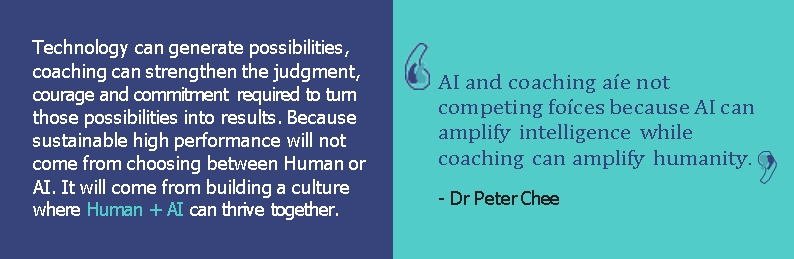
For example, do people challenge assumptions or simply accept the first answer generated? Do team members feel sufficiently trusted to propose unconventional ideas? Canteams disagree productively? Do leaders stimulate thinking rather than suppress it? Arepeople encouraged to experiment, learn and recalibrate when something does notwork? Do they take ownership rather than wait for instructions? These are not primarily technology questions. They are culture questions. A robust and sincere coaching culture helps create the conditions in which people can think bigger, challenge one another, and explore new possibilities. At the same time in doing so, they still remain accountable, exercise good judgement, and maintain high trust.
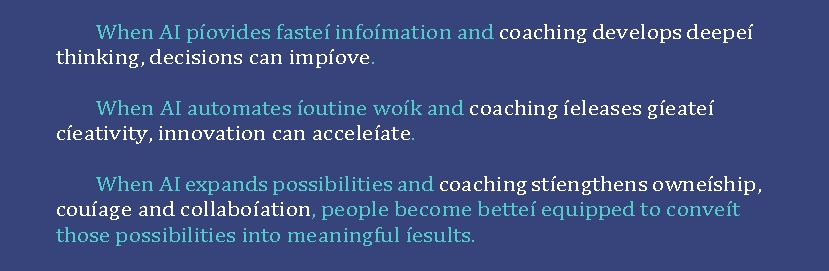
SCALE the Human OS
Technology will continue to spread. Capabilities that look extraordinary today will increasingly become accessible to competitors tomorrow.The more sustainable advantage may not just be the technology an organization possesses, but alsoin the quality ofthe human system operating alongside it.
Ahigh-performance coaching culture develops people who think rather than merely comply, collaborate rather than operate insilos, learn rather than defend yesterday's answers, andtake ownership rather than wait for direction.
In the era of AI,leaders therefore need to ask notonly, "How intelligent isour technology?"
They should also ask: "How effectively are we scaling the human potential required tomake the most of it?"
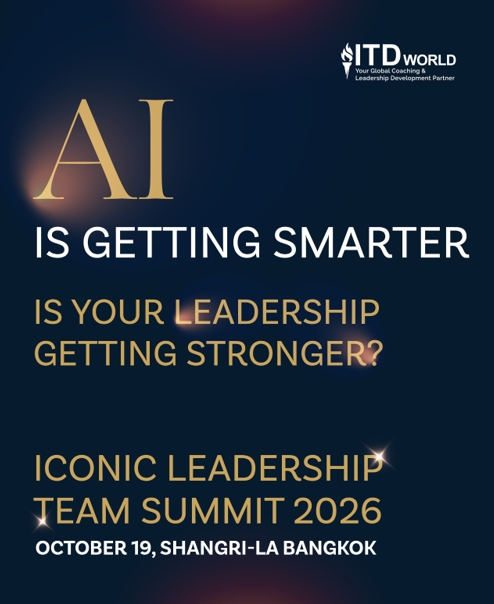
REGISTER NOW: https://itdworld.com/ilts
Book your accommodation:
http://www.shangri-la.com/reservations/booking/en/index.aspx?hid=SLBK&group_code=ITD161026&check_in=20261016&check_out=20261023


.svg)